
Best digital marketing strategies for businesses in SA
1st Aug, 2026
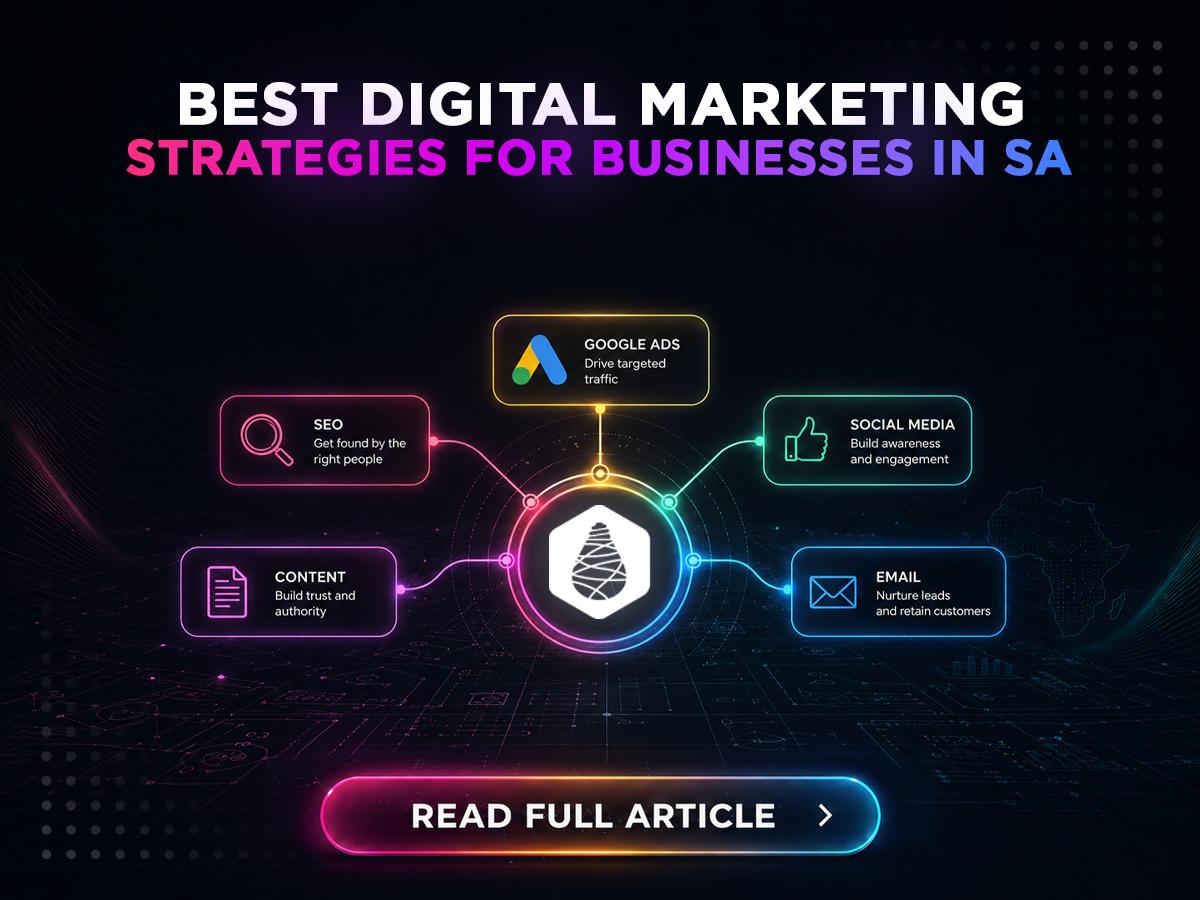
Choosing the best digital marketing strategy for your business is not about doing more. It is about knowing what your business needs next.
Many South African businesses invest in SEO, Google Ads, social media, email campaigns and content marketing without a clear growth path. The result is often busy marketing activity, but limited clarity on what is working, what should change and where the budget should go next.
A strong digital marketing strategy should match your business maturity level. A company that is still building its digital foundation does not need the same strategy as a business ready to scale. A business with poor tracking should not rush into larger media spend. A business with traffic but weak conversions should not keep chasing more clicks before fixing the sales journey.
For marketing managers, CEOs, CMOs, directors and business decision makers, the best strategy is the one that fits the stage of the business, supports commercial goals and creates measurable progress.
What is a digital marketing strategy?
A digital marketing strategy is a structured plan that connects your business goals to the right channels, messaging, campaigns, audience segments and measurement approach.
It is not a content calendar. It is not a list of platforms. It is not a monthly report. Those elements support the strategy, but they are not the strategy itself.
A proper digital marketing strategy answers key questions:
-
Who are we targeting?
-
What do they need to understand before they enquire?
-
Which platforms should we use?
-
How will we measure performance?
-
What does a good lead look like?
-
What needs to happen after someone submits an enquiry?
-
How will marketing support revenue, not just visibility?
Ideation Digital’s Digital marketing strategy approach is built around this type of clarity, helping businesses move away from disconnected activity and towards a stronger growth system.
Why strategy maturity matters
Not every business is ready for the same level of digital marketing activity. A company may want growth, but its website may not convert. Another may want more leads, but its tracking may be incomplete. A third may be ready to scale, but lacks the reporting structure needed to manage larger campaigns properly.
This is why a maturity-based strategy menu works well. It helps leadership choose the right next step instead of copying what another business is doing.
The three key maturity levels are foundation, growth and scale.
Foundation stage: Build the base before increasing activity
The foundation stage is for businesses that need to create structure before pushing harder into campaigns.
This may include businesses with outdated websites, unclear messaging, weak SEO visibility, inconsistent social media, limited tracking or no clear digital roadmap. It also applies to companies that have tried marketing before but cannot clearly explain what worked and why.
At this stage, the goal is not to be everywhere. The goal is to build the base that makes future marketing stronger.
Strategy focus at foundation level
The first priority is clarity. Your business needs to define its ideal audience, core services, value proposition and conversion journey. If your website does not clearly explain who you help, what you offer and why someone should choose you, every platform will underperform.
The second priority is technical readiness. Your website should load well, support mobile users, guide visitors to the right pages and make enquiries easy. Tracking should be set up so that key actions can be measured properly.
The third priority is content structure. Your service pages, blog topics and internal links should support search visibility and help potential customers understand your expertise.
Best digital marketing strategies for foundation stage
For foundation-stage businesses, the best strategies often include a Digital Health Audit, website improvement, SEO groundwork, service page optimisation and basic reporting setup.
This is where Ideation Digital’s Digital Health Audit becomes a strong starting point. It helps identify gaps, missed opportunities and performance issues before more budget is invested.
At this level, paid campaigns can still be useful, but only when the website, messaging and tracking are strong enough to support them.
Growth stage: Turn visibility into quality leads
The growth stage is for businesses that already have some digital presence, but need stronger performance. They may have a functional website, active social media, some SEO visibility or existing campaigns, but results are not yet consistent enough.
At this stage, the goal is to turn digital activity into qualified enquiries, sales conversations and measurable business opportunities.
Strategy focus at growth level
The first priority is demand capture. Businesses need to appear when potential customers are actively searching for their services. This often includes SEO, Google Search Ads and strong landing pages.
The second priority is lead quality. More enquiries are not always better. A good digital marketing strategy should define what a qualified lead looks like, then build messaging, targeting and forms around that definition.
The third priority is conversion improvement. If people visit your website but do not take action, the issue may be unclear copy, weak trust signals, poor page structure or an offer that does not match the audience’s intent.
Best digital marketing strategies for growth stage
For growth-stage businesses, the strongest strategies often include SEO content clusters, Google Ads, landing page optimisation, remarketing, social proof content and conversion tracking.
SEO content clusters are especially useful for building authority. A pillar page can target a broader topic, while supporting articles answer specific questions that potential customers are searching for. This helps improve visibility and gives sales teams stronger educational content to share.
Google Ads can capture high-intent search traffic, but it must be managed carefully. Search terms, landing pages, conversion actions and lead quality must be reviewed regularly.
Remarketing helps keep your business visible to people who have already visited your website or engaged with your content. This is important because many customers do not enquire on the first visit.
Scale stage: Expand with control, reporting and governance
The scale stage is for businesses that already have a working digital marketing system and want to grow with more structure. These businesses may already generate leads from multiple platforms, but need better integration, reporting, governance and optimisation.
At this stage, the goal is not only growth. It is controlled growth.
Strategy focus at scale level
The first priority is integration. SEO, paid media, social media, content, email and website optimisation should work together. The messaging should be consistent, the reporting should connect and each channel should support a clear business objective.
The second priority is advanced measurement. Leadership needs to understand which channels are driving qualified leads, which campaigns support pipeline and which marketing activities deserve more investment.
The third priority is governance. As campaigns scale, the business needs clear processes for planning, approvals, performance reviews, budget decisions and strategic adjustments.
Best digital marketing strategies for scale stage
For scale-stage businesses, the strongest strategies often include full-funnel campaigns, CRM alignment, advanced reporting, sales and marketing feedback loops, paid media scaling, SEO authority building and retention marketing.
Full-funnel campaigns help businesses reach people at different stages of the decision-making journey.
Awareness content introduces the brand.
Educational content builds trust.
Search campaigns capture demand.
Remarketing keeps the business visible.
Landing pages convert interest into enquiries.
CRM alignment is also important. Marketing should not stop at the lead form. If possible, campaign data should connect to sales outcomes, allowing the business to understand which enquiries become real opportunities.
Choosing the right strategy for your business
To choose the right digital marketing strategy, start by identifying your current stage.
If your website, messaging and tracking are weak, you are likely in the foundation stage. If you have visibility but need stronger lead flow, you are in the growth stage. If marketing is already producing results but needs better structure and expansion, you are in the scale stage.
The mistake many businesses make is skipping stages.
They try to scale before the foundation is ready.
They push paid media before fixing conversion issues.
They invest in content without a proper SEO structure.
They chase leads without defining what a quality lead looks like.
A strong strategy prevents wasted effort by showing what should happen first.
The role of reporting in every stage
Reporting matters at every maturity level, but the type of reporting should evolve.
At foundation level, reporting should confirm whether the basics are improving. This may include website health, tracking setup, search visibility and content performance.
At growth level, reporting should focus on leads, conversion rate, cost per lead, enquiry quality and campaign performance.
At scale level, reporting should connect marketing activity to commercial outcomes. This may include qualified leads, pipeline contribution, source performance and revenue influence.
A good digital marketing strategy should make decision-making easier. It should give leadership confidence, not more confusion.
Why South African businesses need a tailored digital marketing strategy
South African businesses operate in competitive, price-sensitive and relationship-driven markets. Customers often compare options carefully before making decisions, especially in B2B and professional service environments.
This means your strategy must do more than create visibility. It must build trust, explain value and guide people towards action.
A local strategy also needs to consider regional search behaviour, industry competition, budget realities, language preferences, buying cycles and customer expectations. What works for a national ecommerce brand may not work for a local service business. What works for a B2C brand may not work for a complex B2B sales process.
The best digital marketing strategy is never copied. It is built around the business.
Choose the strategy that fits your next stage of growth
The best digital marketing strategies for businesses in South Africa are not chosen by trend. They are chosen by maturity level.
If your business is still building its base, focus on the foundation. Strengthen your website, messaging, tracking and SEO structure. If your business is ready to grow, focus on quality leads, conversion and performance campaigns. If your business is ready to scale, focus on integration, governance, advanced reporting and controlled expansion.
A digital marketing strategy should give your business direction, confidence and a clearer route to measurable growth.
If you are unsure which stage your business is in, Ideation Digital can help you find the answer. Start with a Digital Health Audit to understand your current position or explore a tailored digital marketing strategy built around your business goals.
Speak to Ideation Digital today and turn your digital marketing into a focused growth system that works with purpose, structure and measurable direction.